The outdoor gear we grew up with still shapes what we look for in a bag: canvas, leather details, and simple, practical designs. We wanted to bring that heritage style to a well-made backpack we'd use every day.
“I could get lost in those old gear catalogs. They brought back memories of the stuff we grew up with. That’s the feeling we wanted for DAS. When I learned the archive was at Utah State, and they had an outdoor gear design program, I had to reach out. That’s how we met Lucas. Pretty lucky find!”
Designer Lucas Greer began in the Outdoor Recreation Archive at Utah State University, studying hiking packs in catalogs from the 1960s, '70s, and '80s. The shapes, materials, and ways those packs opened offered a starting point. Our own Adventure Tote helped keep the design connected to the rest of the DAS line.
The brief stayed simple: heritage-inspired looks, a place for a laptop, quick access to small essentials, and room for a water bottle. Enough organization to be useful, with space left for your own way of packing.
“I browsed various catalogs from the ’60s, ’70s, and ’80s, looking specifically at vintage hiking backpacks: what features they had, what design lines they had, what materials, how they functioned.”
Vintage backpack photographs shared by the Outdoor Recreation Archive. Explore the archive on Instagram.Original early concept by Lucas Greer. Earlier pockets, colors, and branding shown here changed during development; this drawing does not show the production backpack.
Lucas Greer Backpack designer
Working on the lining. A development sample from Lucas’s workshop.
Sketch. Sew. Test. Refine.
Lucas sewed three prototypes himself, moving between digital patterns, a laser cutter, and an industrial sewing machine. Putting the ideas into real fabric revealed what a drawing couldn't.
The flap was refined to make the bag simpler to get into. A large front pocket was removed when testing showed it wasn't earning its place. The bottle pockets moved lower to help the bag sit more steadily with bottles inside.
“After a lot of testing, we came to the conclusion that the quick-access pocket was pretty big, too far down the bag, and not of much use. So we decided to nix that.”
Start with the shape. An early fabric mockup, before final materials and details.Work through the contact points. Shoulder-strap construction during prototyping.Put it together. Sewing the blue lining on a development sample.
From Lucas’s workshop archive. These are development samples; construction and details changed before production.
From Lucas's sketchbook.
“In the beginning, I was trying to come up with as many different ideas as possible, while incorporating the webbing architecture that was on the Adventure Tote, seeing how that could transfer to a backpack.”
Early concepts for bag opening and design.First prototype design. Front, back, and side drawings for the first prototype. Notice the front pocket is still there.
Original drawings supplied by Lucas Greer. These are development concepts: pockets, construction, colors, and branding changed before production. Select a drawing to see it larger.
What earned its place.
See what you packed.
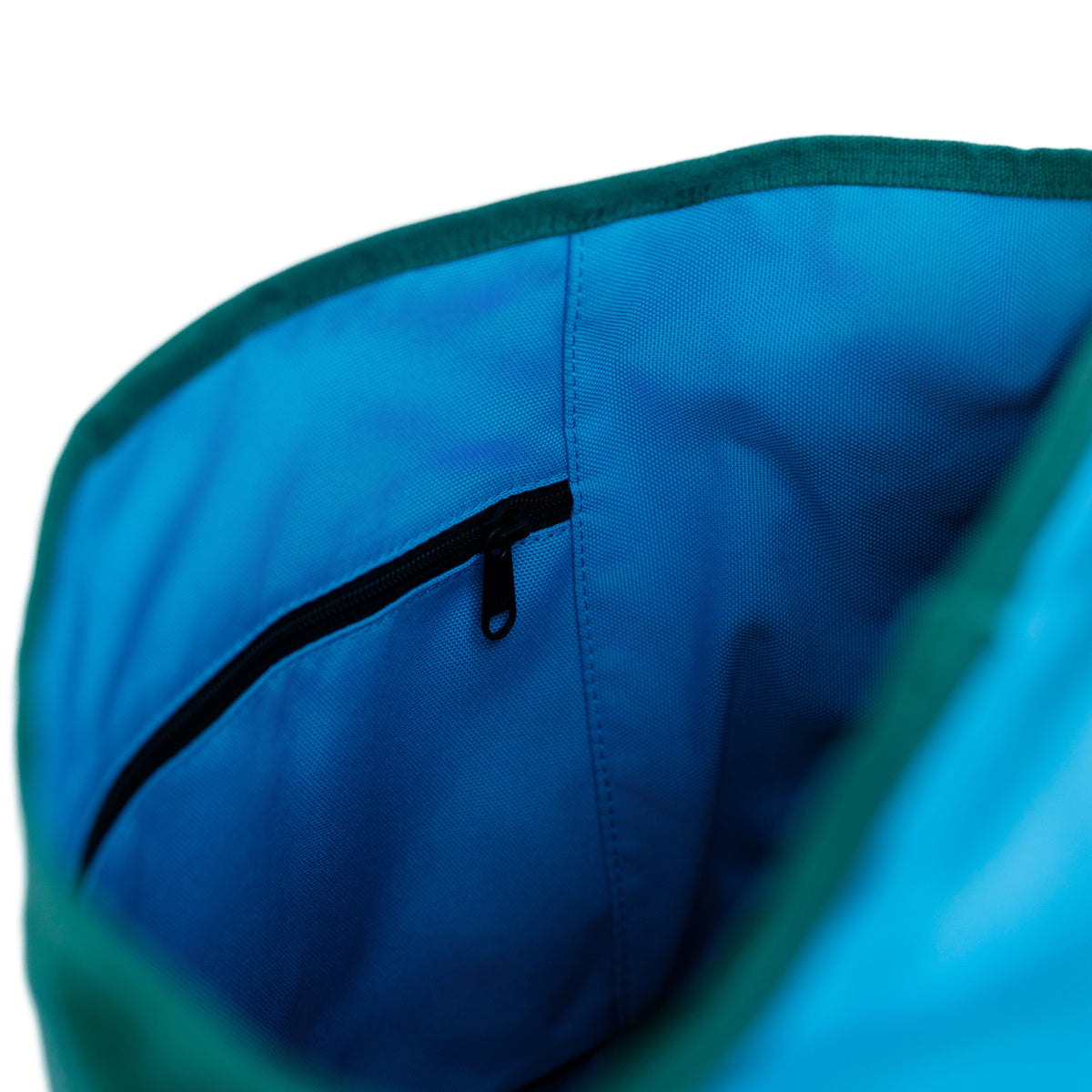
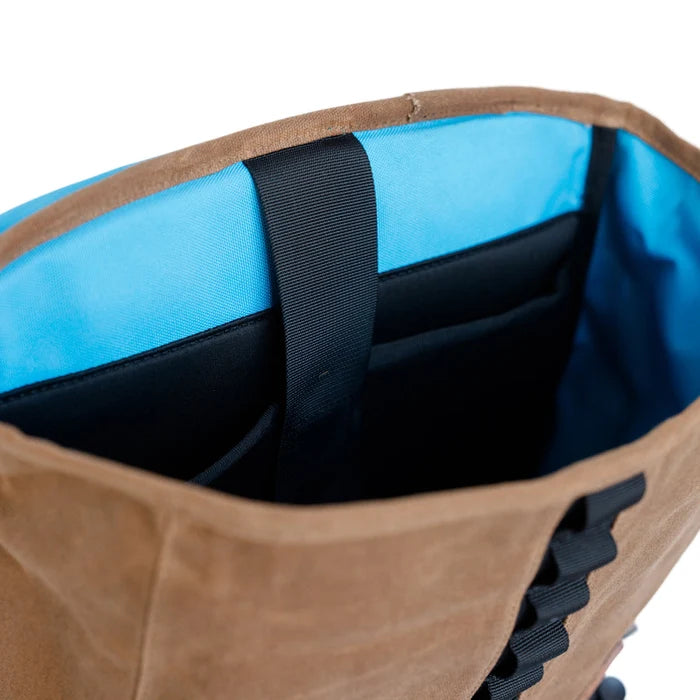
Bright blue lining makes it easier to see inside. An internal zip pocket keeps small essentials together, so a charging cable or headphones have a place to land.
The main compartment stays open for the rest of your day: a layer, lunch, or whatever the next stop calls for.
“The design philosophy is not that there’s a pocket for every little thing you have. If you want to add more organization, we have pouches you can use to organize toiletries, cables, etc.”
A place for the workday.
A padded laptop sleeve with a hook-and-loop securing strap gives your computer a place of its own. Intentionally raised off the bottom of the bag, the sleeve adds cushioning and helps protect your laptop when you set the bag down. It keeps your workday carry organized without dividing up the whole bag.
The sleeve measures 12 inches wide by 16 inches high. Compare your device's actual dimensions before choosing your fit.
“We decided to focus on making the laptop sleeve higher quality, have more padding, and make it so it’s raised off the bottom.”
Canvas with character.
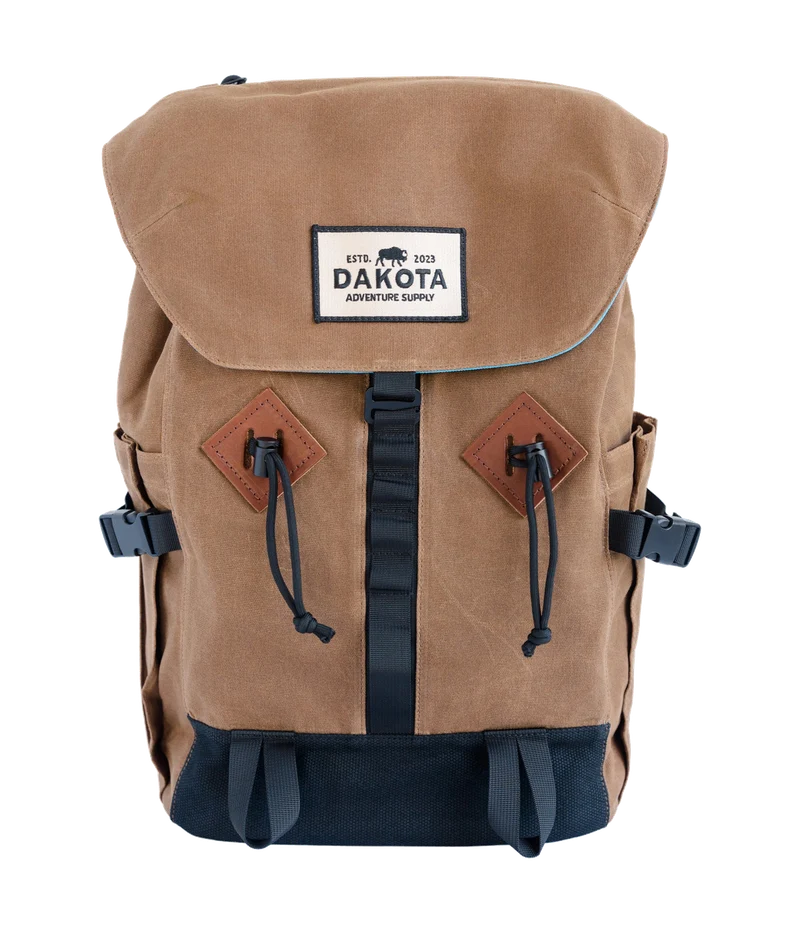
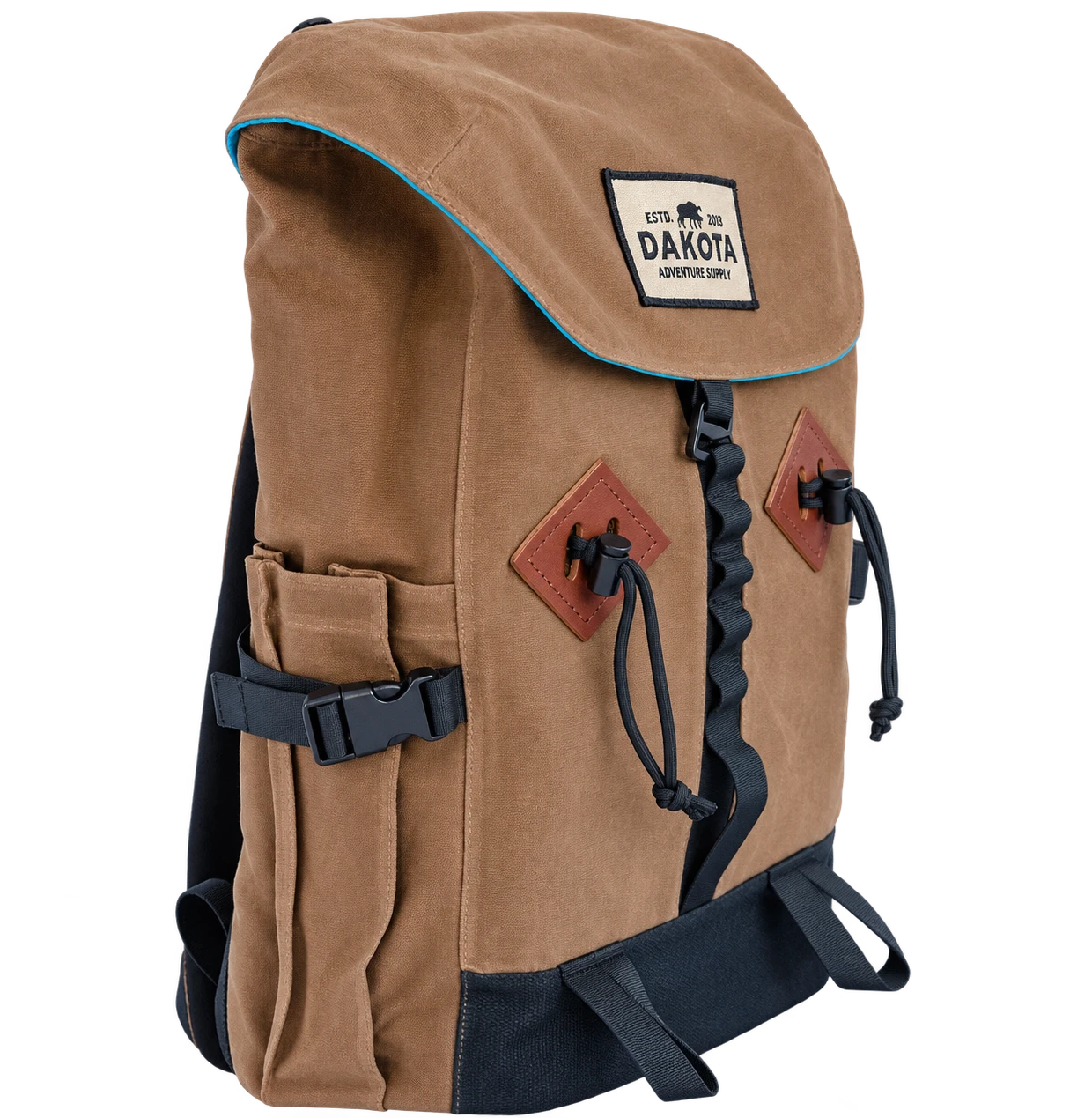
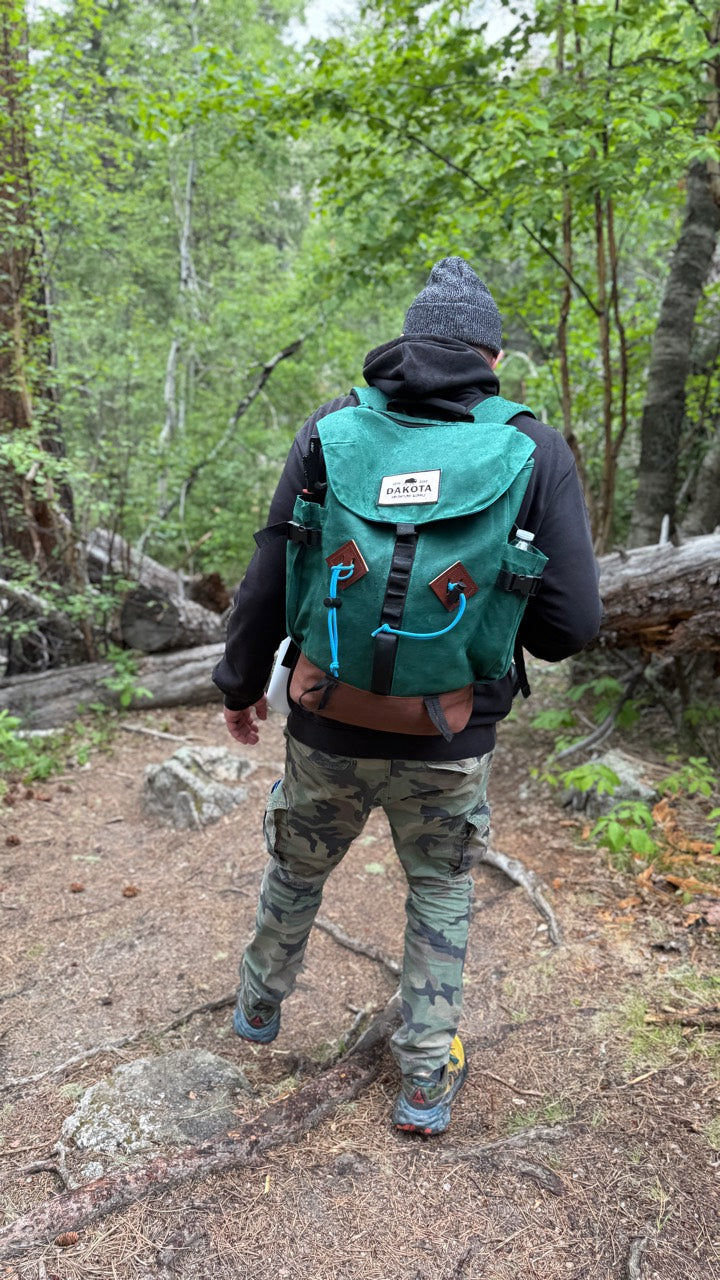
Waxed canvas, leather details, and the Dakota mark carry the heritage inspiration into the finished backpack. Choose Waxed Tan or Waxed Juniper Green.
A metal G-hook secures the flap. External compression lets you adjust the bag around the load you're carrying, while the blue-lined flap pocket and built-in key leash keep small essentials within reach.
“We landed on this really beautiful design, which had that reinforced bottom, like those old vintage packs that we saw in the archive.”
Thought through where it touches you.
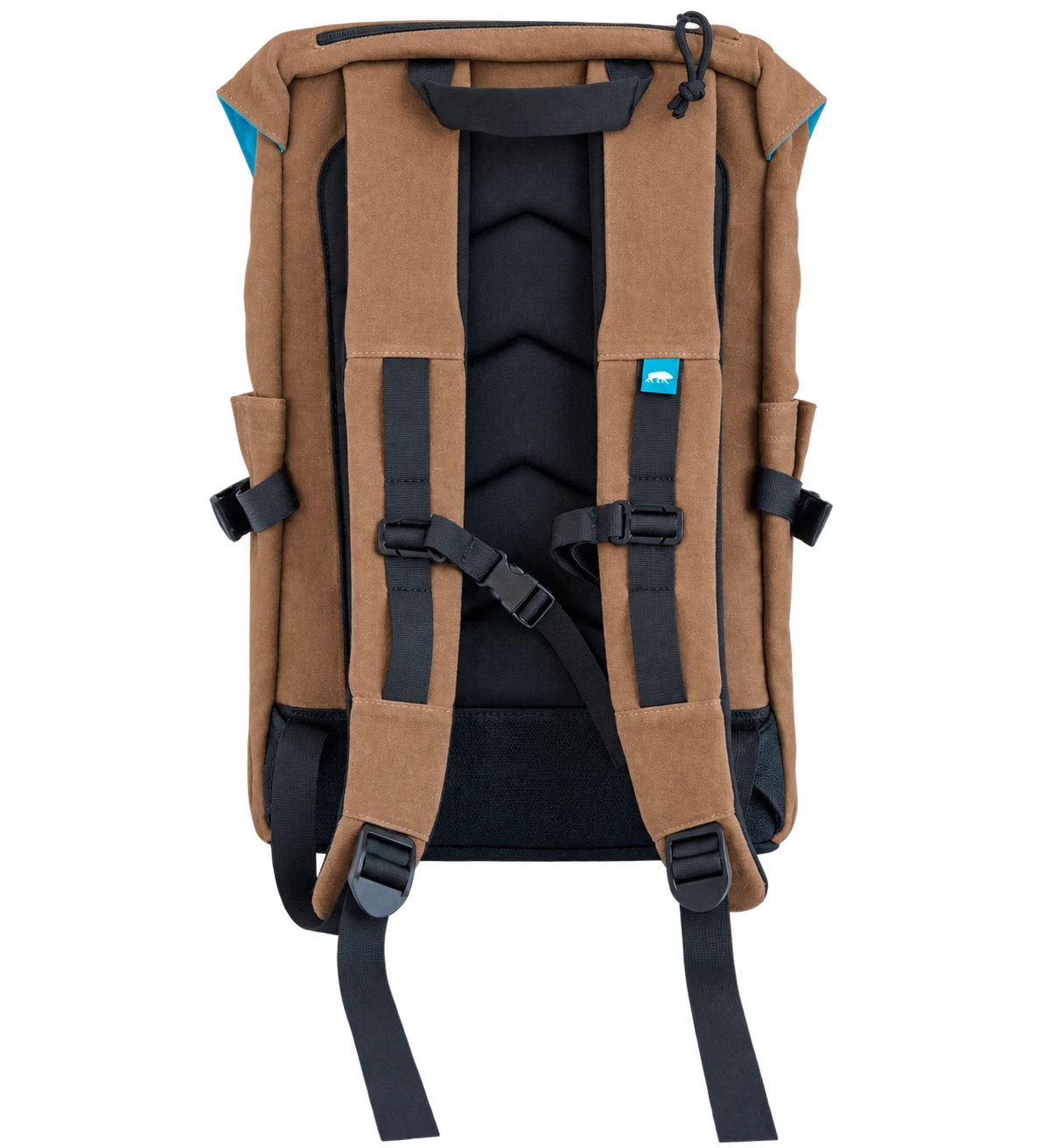
Heavily padded shoulder straps have a neoprene underside that rolls over to the top around the neck. An adjustable sternum strap helps you dial in the fit.
These were part of the design process from the beginning: how the straps sit, how they feel against the body, and how the bag carries through an ordinary day.
“When we designed the shoulder straps, we had it so the neoprene on the bottom rolled over to the top. That way it’s comfortable against the neck where it touches the body.”
Open it. Pack it. Close it.
Opening and closing the flap.Packing the bag and fastening a larger load.
Lift the G-hook out of the loop to open the flap.Hook into a webbing loop to close. Use a higher loop for a larger load.
Easy closure. Expandable main compartment.
The metal G-hook makes the flap easy to open and close with one hand. Hook it into the webbing loops to secure your load.
Packing more? Use a higher loop to give the flap more room. The expandable closure adjusts to handle larger loads.
“One of the main complaints people have with those vintage bags, which have the drawcord and then the [top lid] over them, is that it takes so many steps to get inside. How can we simplify it so the user can easily and quickly get inside the bag?”
Room for a bigger bottle.
The side pockets were designed with larger water bottles in mind. Pleats give the pocket room to open around your bottle, while the side compression straps help keep your load close.
We left out elastic for durability. It is a simple pocket built around something you carry every day.
For everyday. And for the days away.
Twenty-two liters for the workday, a road trip, or a little time outside. Bring the things you need, and leave room for a change of plans.
A laptop and cables for the weekday. An extra layer when you're heading out after work. The same bag, packed your way.